

In higher ed, there’s an underlying assumption that online learning can’t match face-to-face instruction. I understand the impulse. I’ve spent much of my career leading enterprise learning platforms and emerging tech in universities, working alongside faculty experts with deep classroom expertise. I’ve also watched how strong the pull is to replicate what’s comfortable in person — two-hour Zoom classes, however interactive, are exhausting. But as a working adult who keeps signing up for practitioner-led online courses, I want to be honest about what I’ve experienced.
These courses have been some of the most meaningful professional development I’ve done. The scope was smaller, the intensity was about the same, and the outcome was something I could apply to my work the next day.
The four courses
I’ve taken four practitioner-led online courses over the past three years:
- Building a Second Brain (January 2023). Tiago Forte’s course on personal knowledge management. I’d read the book but couldn’t bring myself to restructure decades of messy files. The worksheets and live Q&A with Tiago helped me build a structure I still use everywhere. It was the last cohort he personally taught.
- Terra.do Climate Fellowship (April–July 2023). A cohort-based program on global climate solutions.
- Digital Course Academy (September–December 2024). Amy Porterfield’s program on turning expertise into online courses. The moment that stuck was The Entrepreneurship Experience, where Seth Godin and others spoke about confidence and finding your niche.
- AMP AI Operators Bootcamp (May–June 2026). Rachel Woods’ framework for operationalizing AI in teams. (I wrote about this last week.)
A closer look at Terra.do
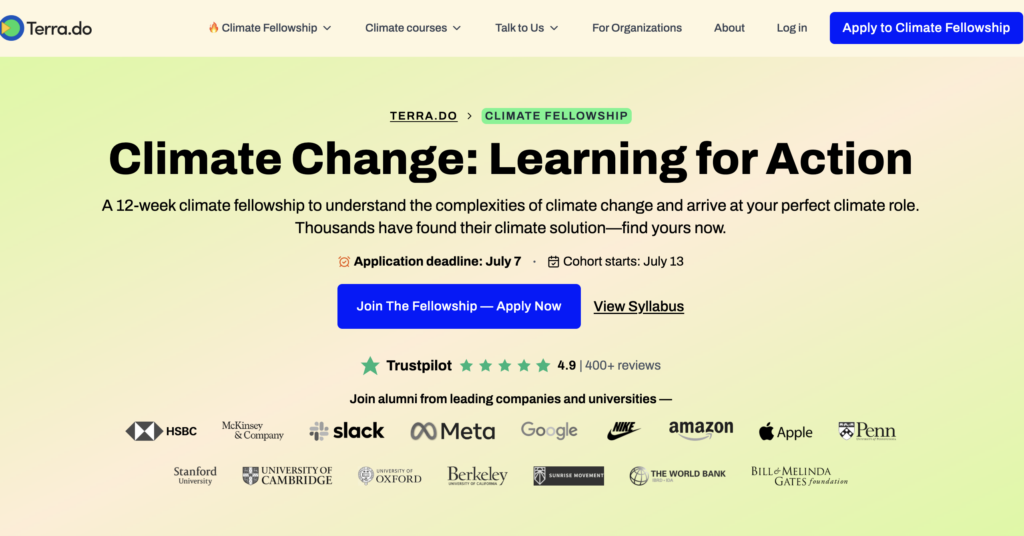
Of the four, Terra.do was most like a traditional university course — readings, assessments, guest speakers, group work.
What made it different was the weekly online lab. For an hour or two each week, I met with a facilitator and a small team of peers from around the world — in my lab, England, Germany, India, the Philippines, and Australia (joining late at night). The projects were simple. What elevated them was the conversation among motivated adults from different countries and disciplines making meaning out of a shared problem — the part that’s hard to engineer. Terra.do made it feel routine.
There’s another layer I haven’t named. Everyone in Terra.do had committed — individually, with accountability — to learning about climate, nature, our trajectory, and the organizations leading the way toward carbon-neutrality. Being among active change agents fed our minds and spirits.
What these courses share
Looking across all four, a pattern shows up:
- Just enough interaction. Live time is precious. These courses use it for what live time is uniquely good for — Q&A, feedback, peer conversation — and let videos and readings carry the rest.
- A clear path. You always know what’s next, what you’re working toward, and what “done” looks like.
- Real practice with feedback. Not pop quizzes; actual artifacts you build, share, and improve.
- Instructors with practice, not just theory. They’ve solved the problem they’re teaching — often in ways that don’t yet have a textbook — and they explain at the level you’re at.
For me, that combination — smaller in scope but similar in intensity to a traditional course with rapid learning techniques — is the difference between learning that lives in a notebook and learning I actually use.
Who’s teaching — and why it matters
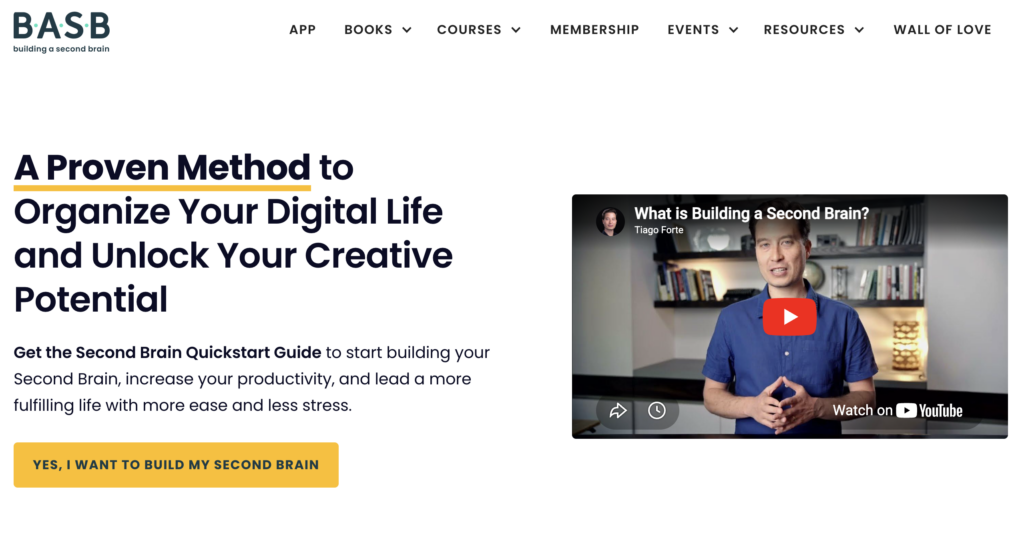
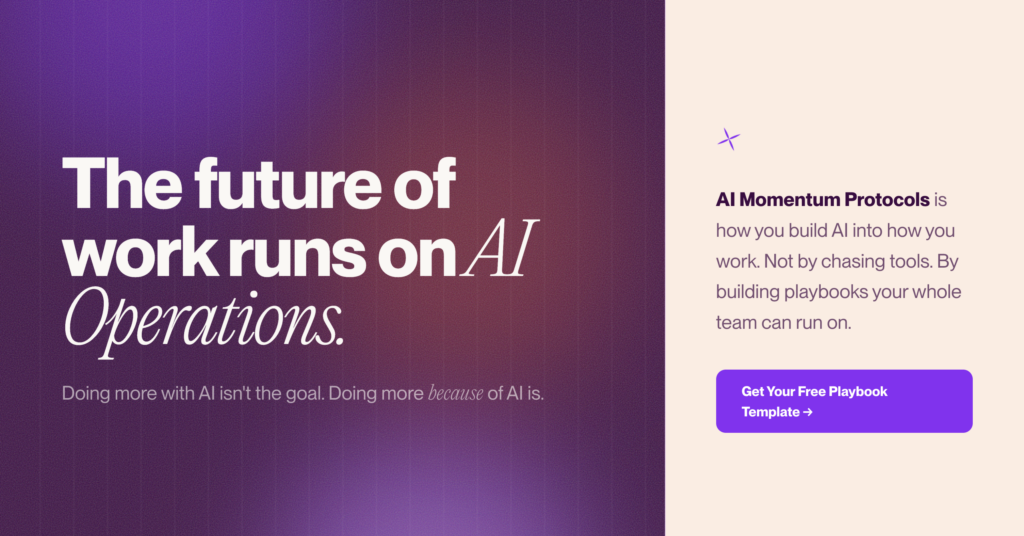
These instructors aren’t all faculty, and they aren’t peers. Tiago Forte built his organizing method while tracking the complex health information of his chronic illness. Amy Porterfield taught people how to package their expertise into online courses to create new income streams. Rachel Woods was a data scientist at Meta before specializing in AI operations. Terra.do offers a vetted curriculum, guest speakers from R1 universities, and a vibrant ecosystem of learners, facilitators, and hiring partners.
What unites them isn’t a credential or a teaching pedigree. It’s freedom from the structures that shape most academic teaching — credit hours, learning management platforms, 16-week semesters, accreditation pacing. Without those constraints, they can design format, length, delivery, and credentialing around the learning. It’s worth asking honestly what we’re protecting and what we might be missing.
For a quick take, Wes Kao’s Why cohort-based courses are the future of learning is worth a few minutes — she co-founded altMBA with Seth Godin and now runs Maven. For the research grounding, see Andragogy in Practice (Journal of Clinical and Translational Science, 2024) on Knowles’ adult learning principles applied to professional training.
A note for higher ed
The frame “online vs. face-to-face” misses the better question: what design makes learning meaningful for working adults? These four courses have answered it for me. The next post asks what higher ed could adopt from what’s working here.
If a practitioner-led course has shaped your thinking, I’d love to hear which one and what it gave you. Pass this along if it resonates.