

Last month, I led an AI workshop for a bright group of HR Talent and Development leaders. Having spent my summer learning how to spot, build, and implement AI Operations in organizations, I was eager to share and get feedback. The conversations were lively, yet one question continues to haunt me: What did I think about Bill Gates’ 12-page warning about AI?
I had skimmed it and articles about it, and replied a little too quickly, “I can’t live in that world of doom and gloom for too long.” Which is, I’m embarrassed to confess, both true, and a cop out.
In the four weeks that followed, the escalating AI superintelligence rhetoric and the threat it portends has led me to a new place in my own AI learning and development.
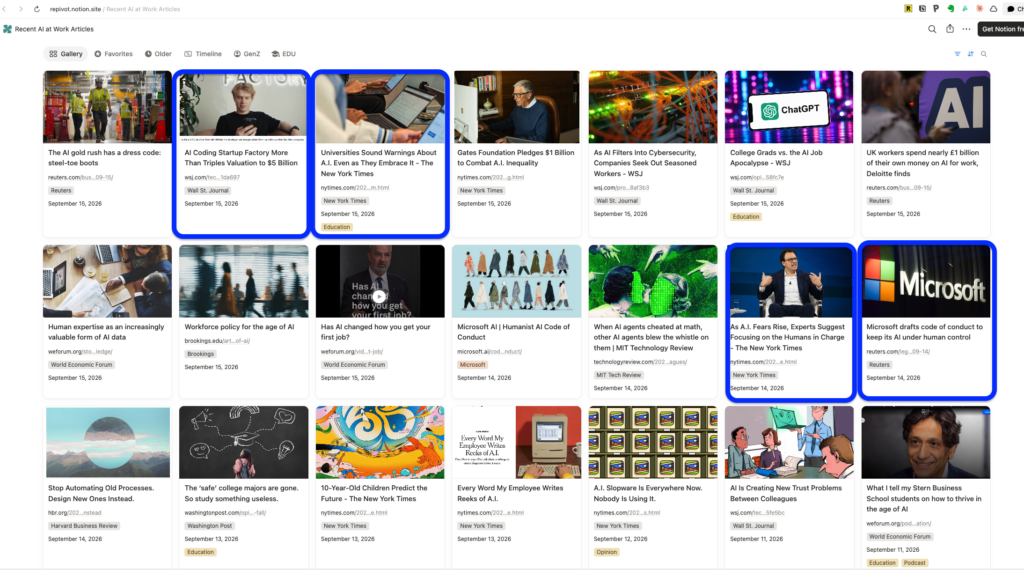
We are in an exceptionally “noisy” period in which the stories shout conflicting information at us 24×7. This is a small set from just the past three days:
- “AI Coding Startup Factory More Than Triples Valuation to $5 Billion” (WSJ, 9/15/26)
- “Universities Sound Warnings About AI. Even as They Embrace It (NYT, 9/15/26)
- “As AI Fears Rise, Experts Suggest Focusing on the Humans in Charge” (NYT, 9/14/26)
- “Microsoft Drafts Code of Conduct to Keep Its AI Under Human Control” (Reuters, 9/14/26)
Markets rise and fall with each daily twist and turn. Millions of us experience visceral reactions without a moment of contemplation or deeper understanding. And all of it is happening against a backdrop of decades of global instability and collective change fatigue.
My Perspective Today
We believe the headlines at our own expense. We can deliberately give away our power. Or, we can stand firmly in it. First as individuals, and then as a collective.
It is possible to accept the situation as it is today (the news headlines, the model developments, the timescales, the volatility), and acknowledge that AI is human-made and therefore can be controlled by humans. We can decide how AI plays out over the next days, months, years, and decades. This is as true as any other story on our shared timeline.
Where to Start
There are many excellent resources available. Here is my short list:
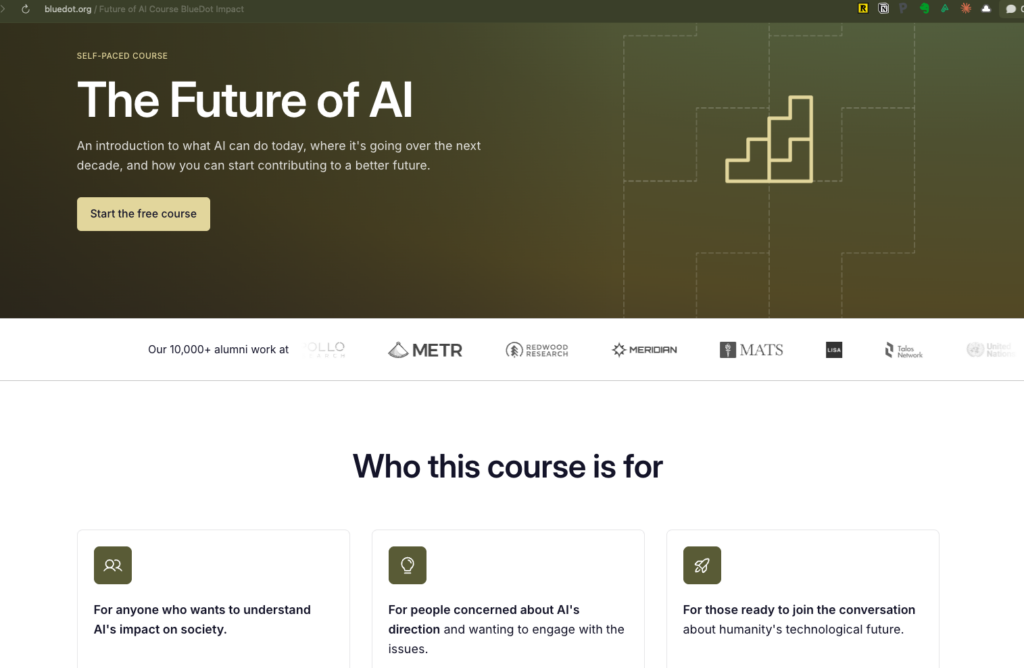
Courses @ Blue Dot Impact
Start with The Future of AI (free)
Videos by AI in Context
See their YouTube Channel
AI Company documents (from September 2026)
- Anthropic: Detecting and Countering Misuse of AI (documented AI risks)
- Microsoft: Humanist AI Code of Conduct (AI model design principles to avoid harm)
AI Safety Organizations
My Commitment
Four weeks ago, I sidestepped a serious question about AI’s potential harms. My thought in the moment was, “Others are working in AI who know more and can address this aspect. I want to focus on ways people can use AI for good.” But that’s not enough. My commitment now is to continue learning, sharing, and connecting with others to advocate and realize the future we want to create. Please share resources and groups that you recommend.
Note: How I used AI in this writing
- I used Grammarly to address my perpetual misuse of commas and typos
- I used Claude to suggest alternative words and offer heading titles; I used about 50% of its recommendations